English Lavender
Lavandula angustifolia
Other names: True lavender, common lavender
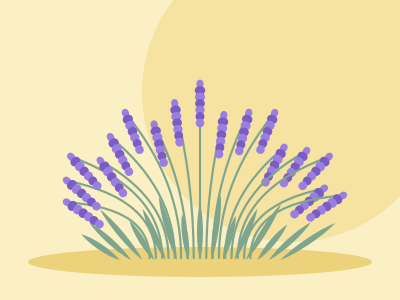
English lavender is a compact, gray-leaved subshrub with spikes of scented purple flowers in early to mid summer. It is the hardiest lavender and the best for drying and cooking. Sun and sharp drainage matter far more than rich soil or regular water.
How to grow English lavender
Light
Plant in full sun, with at least six to eight hours of direct light. In shade the plants grow loose and flower poorly.
Watering
Water new plants weekly through their first summer. Once established, lavender needs water only during long dry spells. Wet soil, especially in winter, kills more lavender than cold.
Soil and feeding
Grow in poor to average soil that drains fast. On clay, plant on a mound or in a raised bed and mix in gravel. Do not fertilize, and mulch with gravel instead of bark.
Planting and pruning
Shear off the spent flower stalks and about one third of the leafy growth right after flowering. Never cut into bare, brown wood, which rarely resprouts. Space plants 2 to 3 ft (60–90 cm) apart for air flow.
Propagation
Take 3 to 4 in (8–10 cm) cuttings from non-flowering shoots in early summer and root them in a gritty mix. Named varieties do not come true from seed.
Common problems
- Plant yellowing and collapsing
- Root rot from wet soil. Improve drainage or move to a raised, gravelly position.
- Woody, open center
- Skipped pruning. Trim every year after flowering to keep the plant dense. Replace plants that are bare at the base.
- Few flowers
- Too much shade, fertilizer or water.
Questions about English lavender
When should I prune lavender?
Right after the main flush of flowers, in mid to late summer. A light tidy in spring is fine once new growth shows, but avoid hard pruning in fall.
Can lavender grow in pots?
Yes. Use a terracotta pot at least 12 in (30 cm) wide, a gritty mix and a sunny spot, and let the soil dry between waterings.
Plant details
| Botanical name | Lavandula angustifolia |
|---|---|
| Family | Lamiaceae |
| Native range | Western Mediterranean |
| Plant type | Perennials. Evergreen subshrub |
| Soil | Lean, sandy or gravelly, sharply drained |
| Flower color | Purple |