Japanese Maple
Acer palmatum
Other names: Palmate maple, smooth Japanese maple
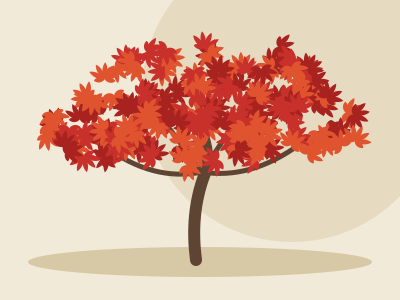
The Japanese maple is a small, graceful tree with finely cut, hand-shaped leaves. Depending on the variety, the foliage is green, red or purple in summer, and it turns brilliant scarlet, orange or gold in fall. It suits small gardens, woodland edges and large containers.
How to grow Japanese maple
Light
Dappled shade, or morning sun with afternoon shade, is ideal. Green-leaved varieties tolerate the most sun. Red and lace-leaf types scorch in hot afternoon sun.
Watering
Keep the soil evenly moist, especially in the first three years and during hot weather. Water deeply once or twice a week instead of little and often.
Soil and feeding
Plant in well-drained soil improved with compost, with the root flare at ground level. Mulch 2 to 3 in (5–8 cm) deep and keep the mulch off the trunk. Feed lightly in early spring if growth is weak.
Planting and pruning
Little pruning is needed. Remove dead, crossing or awkward branches in mid to late winter, or in midsummer after the leaves have matured. Avoid early spring, when cuts bleed sap.
Propagation
Named varieties are grafted by nurseries. Seedlings are easy to raise after a cold, moist winter period, but they vary in leaf shape and color.
Common problems
- Brown, crispy leaf edges in summer
- Leaf scorch from hot sun, wind or dry soil. Water deeply, mulch, and provide afternoon shade.
- One branch suddenly wilts and dies
- Possibly verticillium wilt, a soil fungus. Prune out the dead wood, keep the tree watered, and do not replant maples in that spot.
- New leaves blackened in spring
- Late frost damage. The tree normally leafs out again. Cover small trees when frost is forecast.
Questions about Japanese maple
How fast do Japanese maples grow?
Slowly to moderately, usually 1 to 2 ft (30–60 cm) a year when young and less with age.
Can I grow a Japanese maple in a pot?
Yes. Dwarf and lace-leaf varieties do well for many years in a large container with good drainage. Protect the roots from severe freezes.
Plant details
| Botanical name | Acer palmatum |
|---|---|
| Family | Sapindaceae |
| Native range | Japan, Korea and China |
| Plant type | Trees and Shrubs. Deciduous tree |
| Soil | Moist, well-drained, slightly acidic soil rich in organic matter |
| Flower color | Red |
- Grows in containers
- Pet-safe
- Tolerates shade
- Fall color