Monstera
Monstera deliciosa
Other names: Swiss cheese plant, split-leaf philodendron
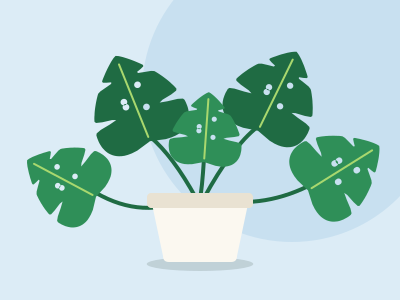
Monstera deliciosa is a climbing rainforest plant known for its large leaves that split and develop holes as they mature. It grows fast in a warm, bright room and forgives a missed watering, which makes it one of the easiest large houseplants to keep.
How to grow Monstera
Light
Place it within a few feet of an east, south or west window, out of harsh midday sun. Bright, filtered light produces the largest leaves with the most splits. In dim corners the plant survives but new leaves stay small and solid.
Watering
Water thoroughly when the top 2 in (5 cm) of mix feels dry, then let the excess drain away. That usually means every 7 to 10 days in summer and every 2 to 3 weeks in winter. Never leave the pot standing in water.
Soil and feeding
Use a loose mix: about two parts potting mix, one part orchid bark and one part perlite. Feed with a balanced liquid fertilizer at half strength once a month from spring to early fall.
Pruning and upkeep
Give it a moss pole or sturdy stake and tie the main stem loosely. A climbing Monstera grows bigger leaves than one left to sprawl. Trim leggy stems just above a node in spring, and repot every two years.
Propagation
Cut a stem section that includes at least one node and, ideally, an aerial root. Root it in water or damp sphagnum moss, then pot it up once the new roots are 2 to 3 in long.
Common problems
- New leaves have no splits
- The plant is young or short of light. Move it closer to a window and give it a support to climb.
- Yellow lower leaves
- Usually overwatering. Check that the pot drains freely and let the top layer of mix dry before watering again.
- Brown, crispy edges
- Dry air or long gaps between waterings. Water more evenly and keep the plant away from heaters and vents.
Questions about Monstera
Why does my Monstera not have holes?
Leaves develop splits and holes with age and good light. A young plant, or one kept in low light, produces solid heart-shaped leaves. Most plants start to split once they are two to three years old.
Should I cut off the aerial roots?
You can trim them without harming the plant, but it is better to guide them into the pot or onto a moss pole, where they help the plant climb and take up water.
Plant details
| Botanical name | Monstera deliciosa |
|---|---|
| Family | Araceae |
| Native range | Southern Mexico to Panama |
| Plant type | Houseplants. Evergreen climbing perennial |
| Soil | Chunky, free-draining mix with bark and perlite |