Chives
Allium schoenoprasum
Other names: Common chives, onion chives
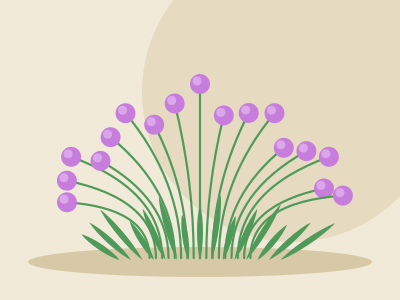
Chives are a hardy perennial herb forming grassy clumps of hollow, mild onion-flavored leaves. Round lilac-pink flowers appear in late spring and are edible too. They grow well in pots and return reliably for years.
How to grow chives
Light
Full sun is best. Chives also tolerate part shade.
Watering
Keep the soil evenly moist, particularly in containers. Dry plants turn yellow at the tips.
Soil and feeding
Plant in soil enriched with compost. A light liquid feed after each heavy harvest keeps potted clumps growing.
Planting and pruning
Harvest by cutting leaves 1 to 2 in (2.5–5 cm) above the soil, working from the outside of the clump. After flowering, cut the whole plant down to 2 in to bring on tender new leaves and prevent self-seeding.
Propagation
Divide clumps every three years in spring or fall, replanting groups of six to ten bulbs. Chives are also easy from seed sown in spring.
Common problems
- Tough, yellowing leaves after flowering
- Normal. Cut the clump back hard and water it for a fresh crop.
- Seedlings appearing everywhere
- Chives self-seed. Remove the flower heads before they dry.
- Clump thin and weak
- Overcrowding. Lift, divide and replant in refreshed soil.
Questions about chives
Do chives come back every year?
Yes. They die back in winter and are among the first herbs to regrow in spring.
Can you eat chive flowers?
Yes. The flowers have a mild onion flavor and are used in salads and to flavor vinegar.
Plant details
| Botanical name | Allium schoenoprasum |
|---|---|
| Family | Amaryllidaceae |
| Native range | Europe, Asia and North America |
| Plant type | Herbs. Herbaceous perennial herb |
| Soil | Fertile, moist, well-drained soil |
| Flower color | Purple, pink |