Rubber Plant
Ficus elastica
Other names: Rubber tree, rubber fig
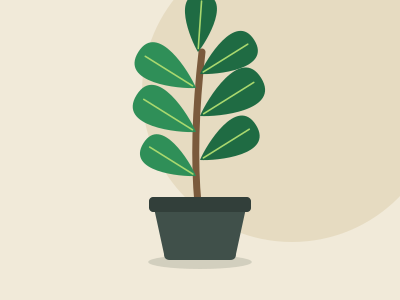
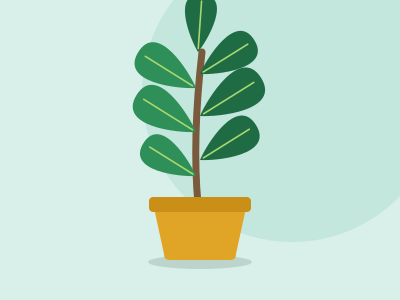
The rubber plant is an indoor tree with broad, thick, glossy leaves in deep green or burgundy. It is sturdier and more forgiving than its relative the fiddle-leaf fig, and it grows quickly once it has settled into a bright spot.
How to grow rubber plant
Light
Bright, indirect light gives the fastest growth and the richest leaf color. It tolerates medium light, where growth is slower and the stems stretch. Variegated varieties need the most light.
Watering
Water when the top 2 in (5 cm) of mix is dry, then let the pot drain. Expect to water about once a week in summer and every two to three weeks in winter.
Soil and feeding
Use a free-draining potting mix. Feed monthly in spring and summer with a balanced liquid fertilizer at half strength.
Pruning and upkeep
Wipe the leaves with a damp cloth so they stay glossy and can absorb light. Cut the top off the main stem in spring to make the plant branch. Wear gloves, because the white sap irritates skin and stains.
Propagation
Root a 6 in (15 cm) stem-tip cutting in moist mix under a clear cover, or air layer a tall stem: wound it, wrap the wound in damp moss and plastic, and cut below the new roots after six to eight weeks.
Common problems
- Lower leaves turn yellow and fall
- Overwatering is the usual cause. Let the soil dry further between waterings and check the drainage.
- Sudden leaf drop
- Cold drafts, a move, or a sharp change in light. Keep the plant in one warm, bright position.
- Tall, bare stem
- Too little light and no pruning. Move it closer to a window and cut the top to force side shoots.
Questions about rubber plant
How do I make my rubber plant bushy?
Cut off the growing tip just above a leaf in spring. The plant responds by sending out two or more side branches below the cut.
Is a baby rubber plant the same thing?
No. The baby rubber plant is Peperomia obtusifolia, a small, unrelated plant that is non-toxic to pets.
Plant details
| Botanical name | Ficus elastica |
|---|---|
| Family | Moraceae |
| Native range | South and Southeast Asia |
| Plant type | Houseplants. Evergreen tree |
| Soil | Well-drained potting mix with perlite or bark |